















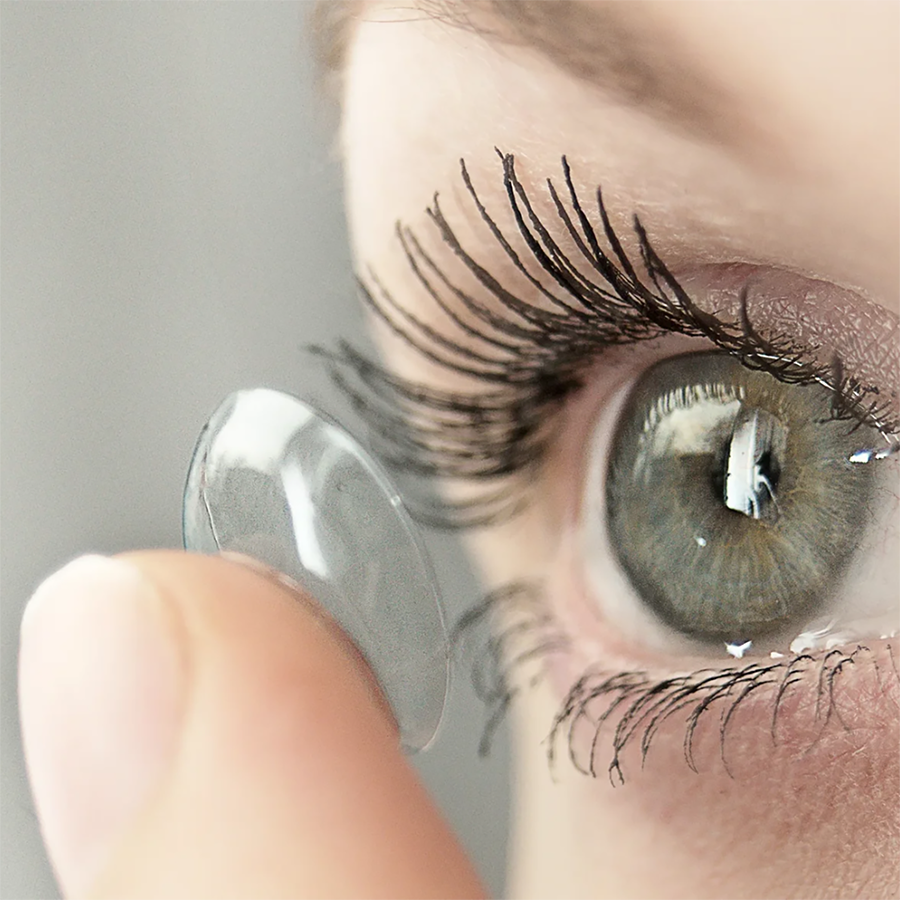
Scientists have developed new contact lenses that allow users to see in the dark. The lenses use nanoparticle technology to absorb low frequency light and convert it into the visible light spectrum. This allows users to experience wavelengths otherwise invisible to the naked eye, a technology scientists referred to as “super vision”.
Traditional night vision goggles amplify visible light by converting protons into electrons. This creates an image viewable to the wearer. These goggles require an energy source that can make them very bulky.
However, the new contact lenses do not require an energy source, which makes them user-friendly and allows them to be the same size as a typical contact lens.
Thus far, the technology has been successful. Researchers in China found that injecting the nanoparticles into the retina of mice resulted in infrared vision. After designing a less invasive option by embedding the technology into a flexible contact lens, they found similar results. Mice with the contact lenses favored boxes with infrared light over boxes with no light.
Scientists also found that with the contact lenses on, humans are able to see flickering infrared light.
The company also designed a wearable glasses version of the technology, which allows subjects to see in finer detail.
This technology may also have applications for colorblind people. By changing the nanoparticles to a modified version, this change may allow them to see invisible color.
Currently, this technology is not readily available, and the lenses need more work before they will be available to the public. The lenses only pick up very bright infrared light from LED sources, so they will have to be strengthened in order to pick up less intense light.