












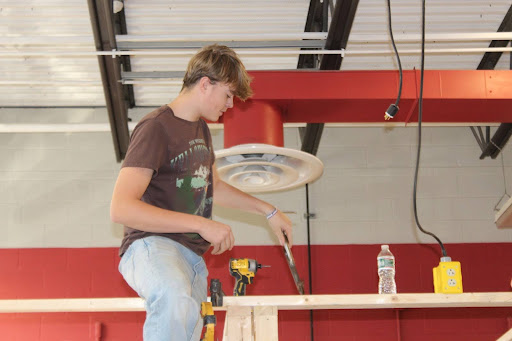
From executing hands-on training to learning about technical knowledge, students taking the Electrical CTE program are thoroughly prepared for potential careers as electricians.
The program covers a variety of topics and centers on work in shops. A crucial part of the curriculum is performing work in electrical booths, where students practice skills such as rough-in wiring, installing boxes and building circuits from start to finish.
A current project for electrical students has been the collaboration with the Building CTE students, who have been constructing the basic framework of new electrical booths.
Once finished, electrical students will use the booths to execute their acquired skills. Electrical instructor Mr. Brian Watson expects the booths to be used for about three years.
“Building’s done everything they can do to make it as easy as they can for us,” junior electrical student Philip Leslie said. “We just have to make sure we give power to every single booth.”
Electrical CTE is divided into three levels. Starting with level one, students learn the basics and work in the booths on a smaller scale.
Level two students are all assigned to a booth where they are expected to perform their work. Almost all level three students are enrolled in Co-Op, meaning they leave school early to work at jobs in the electrical field. Level three students who don’t participate in Co-Op work with the level two students.
Mr. Watson monitors the students’ work outside the classroom.
“It’s an excellent opportunity,” Mr. Watson said. “The real world is so much different than in here, so it’s better to have them get experience.”
Although AI may take over some jobs in the future, Mr. Watson is confident that it can not replace electricians.
“AI is not going to take the job of a trades person,” Mr. Watson said. “You’re always going to need somebody to drill the holes, hammer the nails and make the connections.”